What is the R Value of Spray Foam?

Understanding R-Values

For starters, R-Value is the resistance value. What this means is if you put a heat source (sun and radiant heat from outside home) on one side of a chamber and 1 inch insulation on the other side, then R-Value is the resistance to the heat saturation to the other side of that chamber. Simply put, R-Value is the way that professionals and customers have some sort of “apples to apples” to compare when discussing which foam is right for them.

There Are Two Types of Spray Foam: Open-Cell and Closed-Cell

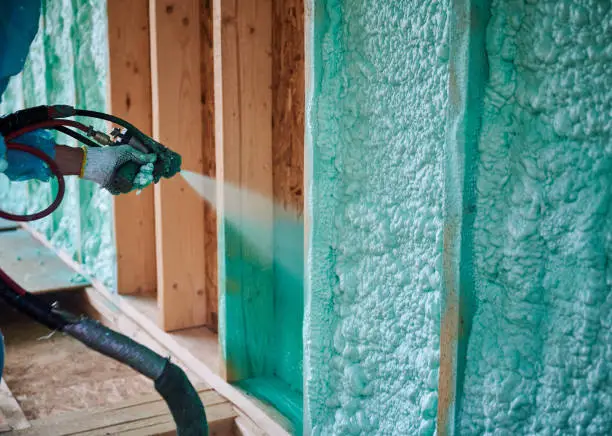
Open-cell spray foam is commonly used in ceilings, walls, and roofs because it has a low density, expands easily, and proper R-value’s can be achieved for about half the price of closed cell foam. Closed-Cell spray foam is more dense and provides a better air barrier and is more resistant to moisture. Professional insulation contractors will typically apply it in crawlspaces, basements and metal buildings.

R-Values by Region

The R-Value required in your home is different depending on how it is applied, what material is used, and what climate zone you live in. Here in Georgia, around Atlanta and north we are in climate zone 3. As you get into north Georgia, we transition to climate zone 4. Code requires an R-Value of R-13 in the wall and R-38 in a ventilated attic using Fiberglass. In climate zone 4 an R-49 of Fiberglass is required to be installed on the attic floor. Insulating with spray foam moves you to a different application of technology. An encapsulated attic is and unvented attic system. The spray foam is installed against the roof deck with code requiring it to be R-20. Code recognizes the performance of spray foam in an unventilated attic system is much greater than fiberglass. This is the reason spray foam in a roof deck only needs to be an R-20 in both climate zone 3 and 4.

The R-Value of 1 inch of open-cell spray foam is about an R-3.4 per inch, while 1 inch of closed-cell spray foam is around an R-7.1 per inch. Remember, closed-cell is much more dense!

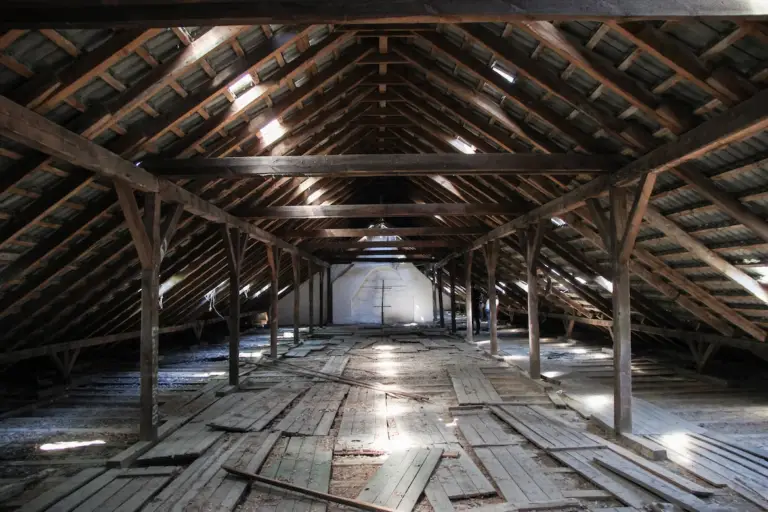
Insulating a roof deck with R-20 spray foam exceeds the performance of R-38 so much so, that even in climate zones where R-49 is required, it also exceeds the performance factor there. The reason for this is because of how the spray foam is applied and the technology that is applied. Meaning? You’re migrating your home from a ventilated attic to an unventilated attic using spray foam only at an R-20 and eliminating things like ridge vents, passive vents, and power vents.

Why Does an Unventilated Attic Matter?

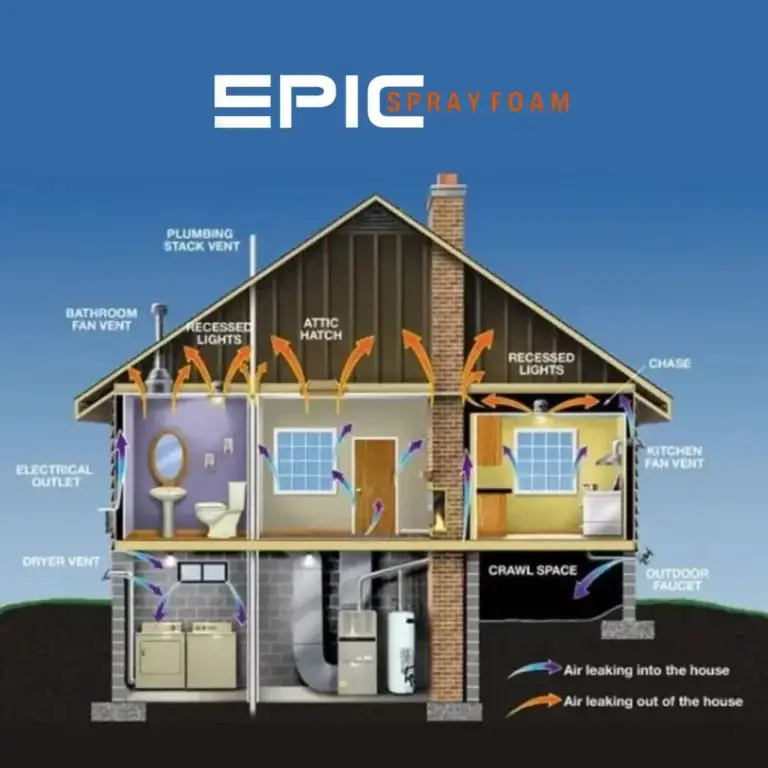
When you encapsulate an attic you stop the stack effect, and the stack effect is what puts a negative pressure on your home. A stack effect is when your attic heats up, as it’s traditionally designed, and as air rushes out of your vents in your attic it has to be replaced. Typically the air comes in from the soffits, but soffits are rarely sized correctly, get clogged by debris and painted over as time goes on. The net free area of your soffit vent becomes reduced. Even on new homes, soffits are typically not balanced properly and won’t provide the right amount of air flow. Here in Georgia, we heat up so quickly on the average day that the attic heats up and very quickly begins to pull a negative pressure on the house. (aka the stack effect). As air is rushing up and out, you now have make-up air being pulled in from every penetration, window, door throughout main level of home and basement as well. For homes that are on a crawl space it means that the air from crawl space is being pulled into the home. A large percentage of the air in a home, because of the stack effect, is now air from the crawl space. By properly insulating your home, you are decreasing the loss of air from your home while also improving the air quality inside of it!

landscape 2

The Benefits of Spray Foam Insulation In Basements

Transform Your Space From Drafty and Uncomfortable to Warm and Inviting We’ve all experienced what it’s like to be in a residential basement that feels drafty, uncomfortable, and downright creepy! When you add in the dangerous mold, allergens, and pests that can come with these types of dark and damp conditions, it’s not a part of the house where anybody

Read More

Insulation and Pest Control: How Spray Foam Can Help You Keep Unwanted Critters Out Of Your Home

The sounds are coming from inside the house. As a homeowner, this statement can be your worst nightmare! If rats, mice, squirrels, raccoons, insects, birds, snakes, or other unwanted critters have ever infested your property, you know it can be a major nuisance. Not only do they cause expensive damage, but they also threaten your family’s health and safety. Pest

Read More

Is Your House Making You Sick? 

How Spray Foam Insulation Can Help You Keep a Clean and Healthy Home Environment The old saying, “there’s no place like home,” still rings true. We all want the place where we live to be a safe haven for ourselves and our families, and that means keeping our space clean and comfortable. Unfortunately, there are many factors that can impact

Read More
large should you spray foam over your existing insulation 1

Should You Spray Foam Over Your Existing Insulation? 

If you’re noticing that your home’s basement is cold and drafty, your attic or upper rooms are uncomfortably hot, or your energy bills are high month after month, you most likely have an insulation problem on your hands! Old, deteriorated, or insufficient insulation can compromise the comfort and safety of your property, and cost you an average of 20% more

Read More
home insulation

Should You Trust a Pest Management Company With Your Home Insulation?

For many homeowners, pest management is a key factor in selecting the type of insulation they want to use throughout their property. Especially when it comes to harder-to-reach areas in attics and basements, it’s important to choose an insulation product that will support your efforts to keep unwanted critters, as well as the harmful bacteria and expensive property damage that

Read More
attic insulation

Should You Install Radiant Barrier In Your Attic?

As energy-efficiency measures have grown in popularity in recent years, many of our customers ask us about radiant barrier, and whether it is the best choice for their attic. Whether you’re building a brand new construction, or simply replacing the roof or attic of your existing home, radiant barrier can complement your insulation to regulate temperature and save you money

Read More
Thermal Bridging: An Expert Guide

Thermal Bridging: An Expert Guide

Thermal bridging is an essential but often overlooked concept in the construction of buildings. It refers to the process by which heat is transferred between the inside and outside of a building, either through direct contact or through air infiltration. Thermal bridging can have a significant impact on a building’s energy efficiency, which can translate into long-term cost savings.  Understanding

Read More
Energy-Efficient Home Improvements

Energy-Efficient Home Improvements

Are you looking to make some energy-efficiency upgrades to your property? Maybe you’re tired of paying sky-high energy bills every month, or perhaps you just want to make your space more comfortable while reducing your carbon footprint.   A few small changes can make a big impact on your ongoing energy consumption. For example, simple steps like upgrading your insulation, replacing

Read More
Spray Foam Metal Building

Spray Foam Metal Building

If you’re looking for a durable and energy-efficient solution for your metal building, spray foam insulation may be the answer you’ve been searching for. Spray foam insulation is popular for metal buildings because it provides superior thermal performance, air sealing, and moisture management. It also helps to reduce noise pollution and prevent the growth of mold and mildew. Spray foam

Read More
What Is The Best Insulation

What Is The Best Insulation?

Insulation is a crucial component when it comes to keeping your home comfortable and energy-efficient. But with so many different insulation types available, choosing the best one for your needs can be overwhelming. Each type has pros and cons, from traditional fiberglass to eco-friendly cellulose. So, what is the best insulation for your home? The answer depends on several factors,

Read More